


Sponsored by WorkSafe Ontario Fund, inaugural What’s Working? What’s Next? event focused on reaching small businesses early with prevention system’s OHS knowledge
Every day in southwestern Ontario, four small business employees get hurt on the job—hurt seriously enough to need time off. For the two-thirds of small businesses with four employees or fewer, losing just one worker can mean losing a quarter of their workforce.
That’s one of the reasons the health and safety of workers is intricately linked to the economic viability of a small business, said Institute for Work & Health (IWH) president Dr. Peter Smith at the inaugural IWH research forum titled What’s Working? What’s Next? Building the evidence to keep small businesses safe and sound.
“Small businesses are more economically competitive when they can protect the health of their workers,” said Smith, who presented on the injury risk profile of small businesses at the event sponsored by the Workplace Safety and Insurance Board with the support of WorkSafe Ontario Fund.
“It’s not an either-or. It’s not that you either focus on safety or you focus on productivity. It’s both-and. You keep your businesses competitive by safeguarding the health of workers,” he added.
Small businesses, which make up almost nine in 10 businesses in Ontario, have higher injury rates than larger business. This difference is even more pronounced when it comes to the more serious injuries.
But small businesses can eliminate their higher risk of injury by making sure they have occupational health and safety (OHS) policies and procedures in place, noted Smith.
“Our work at IWH has shown that employees in small business tend to report that policies and procedures in the workplace are inadequate,” said Smith. “When we look at small businesses that have those in place, their injury rates don’t look different from larger employers that also have these in place. So that’s an important lever that could be pulled in terms of protecting workers at small employers.”
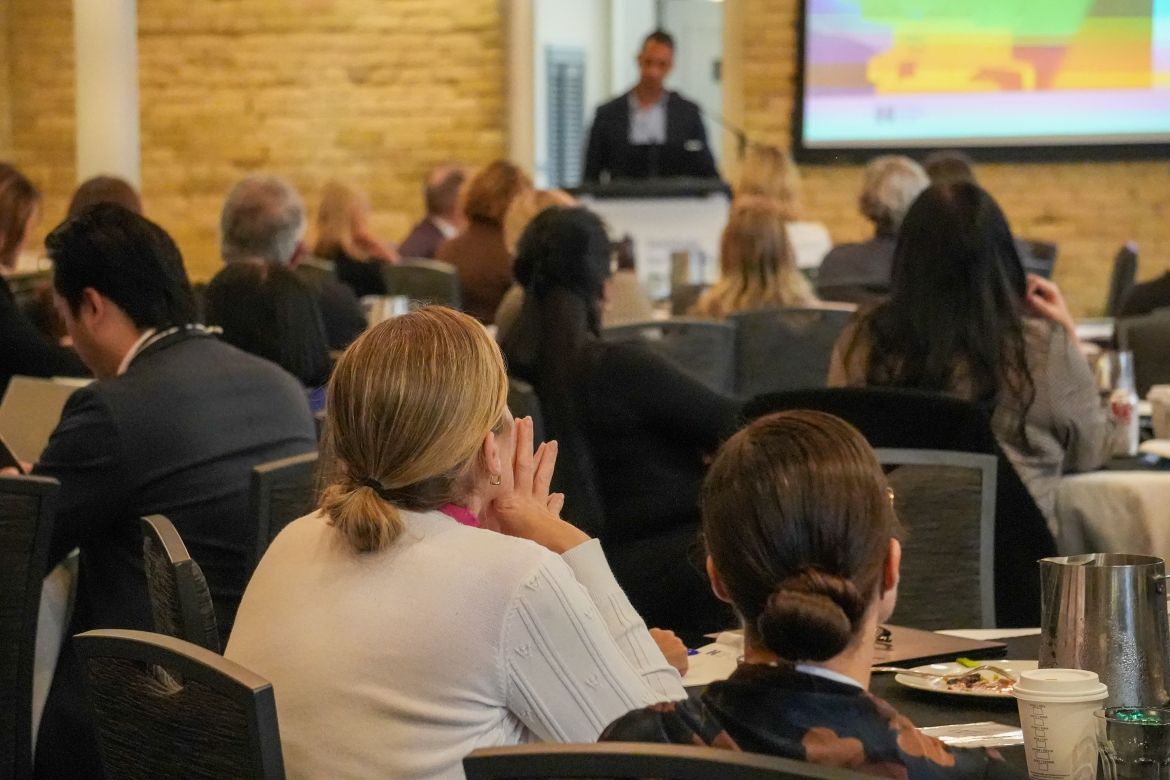
Forum participants, many of whom are business owners and operators from the London area, were presented with IWH research on the OHS vulnerability framework, perspectives from new business owners about their OHS needs, and on the future challenges that can impact OHS over the next 15 years.
“This forum brought together leading research and real-world experience to help small businesses strengthen worker health and safety,” said Joshua Workman, CEO of WorkSafe Ontario Fund (WSOF), which brought the Forum to London. “Both the research and the first-hand perspectives shared by business owners underscored a clear message: stronger health and safety practices lead to healthier, stronger businesses and better financial outcomes.” Supporting the IWH research is part of WSOF’s mission to turn research and innovation into practical solutions that prevent workplace harm, Workman added.
Reflecting on IWH research evidence showing that new business owners are interested in receiving health and safety information very early upon registering their businesses, panel speaker Rod Cook, Vice-President of Workplace Health and Safety Services at WSIB, said the wealth of knowledge already exists in the prevention system.
“As a system, how do we do a better job of getting that knowledge to businesses so they know they already have this information free to them, if they’re registered with the WSIB,” he said.
He noted that the WSIB’s Health and Safety Excellence Program should be promoted more to small employers as a resource—especially for the kinds of policies and procedures that tend to be more lacking in small businesses. “There are answers in the system; we just need to get them into the hands of small businesses.”
The day’s agenda was well-received by attendees. In comments heard around the room, people spoke of being inspired and having made new connections to resources and service providers. Participants said they appreciated the breadth and scope of the research shared. They also valued the opportunity to network and, as one person said, “connect with others who are also passionate about workplace health and wellbeing.”