
Illness/injury prevention
IWH has a long history of conducting research to provide practical guidance to employers, workers, OHS professionals and regulators about what works and what doesn’t in injury or illness prevention. This research targets the injury and illness prevention practices of workplaces, as well as the programs developed by governments, health and safety associations and others to support and motivate workplaces to adopt effective practices.
Featured

IWH Speaker Series
How new businesses get their start in workplace health and safety: implications for research and policy
Published: April 21, 2026

At Work article
IWH study reveals gaps in health and safety knowledge about new businesses
To best prevent injuries, OHS management in small businesses should start early in their lifecycle. But according to a new IWH study, few programs or policies are specifically aimed at helping new businesses start managing OHS.
Published: April 10, 2026
At Work article
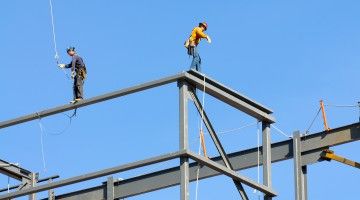
IWH study in construction sector suggests unionized firms are safer
First industry-wide study in Ontario by Institute for Work & Health finds unionized construction workers report more claims overall but fewer claims that result in time off work.
Published: November 2015

At Work article
Distinct types of OHS vulnerability seen in young, temporary, small business employees
A tool developed by IWH measures three types of vulnerability to workplace health and safety risk.
Published: November 2015
Project report
Project report
Economic burden of lung cancer and mesothelioma in Canada due to occupational asbestos exposure (2015)
This November 2015 presentation provides an early look at the results of an economic burden study on the costs to Canadian society of new cases of lung cancers and mesothelioma attributable to occupational asbestos exposures in a particular year.
Published: November 2015

IWH in the media
Hand in hand
The debate on the role of unions in influencing workplace safety is as old as unions are. Organized labour, by serving as employee advocates, may have a positive influence on job safety after all, according to a recent Institute for Work & Health (IWH) study.
Published: OHS Canada, November 2015
IWH in the media
Exercise to ease MSD pain
You’ve been proactive, taking steps to manage job stress, and making ergonomic adjustments and enhancements to your work area to protect against musculoskeletal disorders (MSDs), but these steps alone may not be enough. A new study recommends that exercising on the job could be your best defence against upper body MSDs.
Published: Health and Safety Report, November 2015
IWH in the media
The vulnerable worker
The term “vulnerable workers” is used increasingly in occupational health and safety (OHS) to describe those at greater risk of injury. Research at the Institute for Work & Health (IWH) has recently explored whether worker or workplace factors are linked to worker vulnerability. The result is a new 29-item questionnaire that measures the extent to which workers are at increased risk of work-related injury and illness and conceives vulnerability as a function of four distinct dimensions.
Published: OOHNA Journal , October 2015

At Work article
IWH leading indicator tool wins over advocates across Canada
The eight-item IWH-OPM is adopted in several provinces as a measure of health and safety performance in workplaces
Published: August 2015
Journal article
Journal article
The development of a conceptual model and self-reported measure of occupational health and safety vulnerability
Published: Accident Analysis and Prevention, June 2015
Issue Briefing
Divergent trends in work-related and non-work-related injury in Ontario
An IWH study found strongly diverging trends in the annual incidence of occupational injury and non-occupational injury among working-age adults in Ontario from 2004 to 2011. This Issue Briefing highlights opportunities to improve the monitoring of injury across Canada.
Published: June 2015

At Work article
IWH research on vulnerable workers leads to tool for measuring risk factors
29-item survey gauges vulnerability via workplace hazards, policies, procedures and worker awareness.
Published: April 2015