
Return to work, accommodation and support
IWH has a long history of conducting research on practices, policies and processes that help workers sustainably return to work after an illness or an injury. This page pulls together IWH research and resources on employer supports, job accommodations and modifications, as well as other related issues such as disclosure of disability.
Featured

IWH Speaker Series
Using cannabis to manage symptoms of work-related injuries: Experiences of injured workers in Ontario
Published: February 24, 2026
At Work article
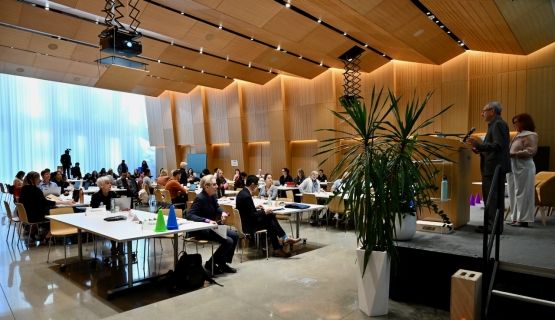
Inclusive employment strategies, resources showcased at symposium
Published: November 12, 2025
Journal article
Journal article
Combined associations of work and leisure time physical activity on incident diabetes risk
Published: American Journal of Preventive Medicine, March 2021
Project
Project
Evidence-informed workplace policies and practices for the prevention of PTSI work disability
An IWH study will add to the guidance available to first responders (police, firefighters, paramedics) in Alberta and beyond on the workplace policies and practices that may help prevent PTSIs.
Status: Ongoing
Project
Project
Future-focused job accommodation practices for the school-to-work transition
Difficulties faced by young people during the school-to-work transition can have a lasting effect and contribute to adverse labour market outcomes that extend across one's working life. This studies explores the emerging barriers that young people with disabilities could face in accessing needed job accommodations within the changing world of work.
Status: Ongoing

Research Highlights
Is precarious work more prevalent for people with disabilities? The role of age and job tenure
Workers with disabilities are no more likely than those without to work in precarious jobs. However, some subsets of people with disabilities are more likely to work in precarious jobs—older people or people with shorter job tenure. Contrary to expectation, younger people with disabilities are not more likely than older people with disabilities to have precarious jobs. Among people with and without disabilities, having better health is linked to a lower likelihood of working in precarious jobs.
Published: February 2021
IWH Speaker Series
IWH Speaker Series
Ontario Life After Workplace Injury Study: What we've learned so far
The Ontario Life After Workplace Injury Study (OLAWIS) is looking at the long-term health and labour market outcomes of workers disabled by work injury or illness after they are no longer receiving benefits or services from the Workplace Safety and Insurance Board. As part of the study, over 1,130 eligible claimants were interviewed at 18 months post-injury and asked about a wide range of factors, including their work status and income, physical and mental health, case manager and health-care provider interactions, and employer return-to-work support. In this presentation, Dr. Cameron Mustard shares what the researchers have learned so far about this group of injured workers.
Published: February 2021

At Work article
People’s reasons for disclosing episodic disabilities linked to support they receive
Should people with an episodic disability disclose their condition at work? It's a complex decision. This new study looks at people's reasons for disclosing (or not) and explores whether they are linked to outcomes.
Published: February 2021
Journal article
Journal article
Does it matter what your reasons are when deciding to disclose (or not disclose) a disability at work? The association of workers' approach and avoidance goals with perceived positive and negative workplace outcomes
Published: Journal of Occupational Rehabilitation, February 2021
Journal article
Journal article
Getting the message right: evidence-based insights to improve organizational return-to-work communication practices
Published: Journal of Occupational Rehabilitation, February 2021
Project
Project
Developing a framework for measuring culture change related to accessibility and inclusion of persons with disabilities
Research shows people with disabilities are often not permitted to, and/or are prevented from, participating in various activities in society, including employment. Culture change is needed to make substantive and sustainable change. This project aims to develop a set of clear and robust measures to track culture change as part of efforts to advance social inclusion and accessibility.
Status: Ongoing
Journal article
Journal article
Online resources supporting workers with chronic episodic disabilities: an environmental scan
Published: International Journal of Workplace Health Management, January 2021