
Return to work, accommodation and support
IWH has a long history of conducting research on practices, policies and processes that help workers sustainably return to work after an illness or an injury. This page pulls together IWH research and resources on employer supports, job accommodations and modifications, as well as other related issues such as disclosure of disability.
Featured

IWH Speaker Series
Using cannabis to manage symptoms of work-related injuries: Experiences of injured workers in Ontario
Published: February 24, 2026
At Work article
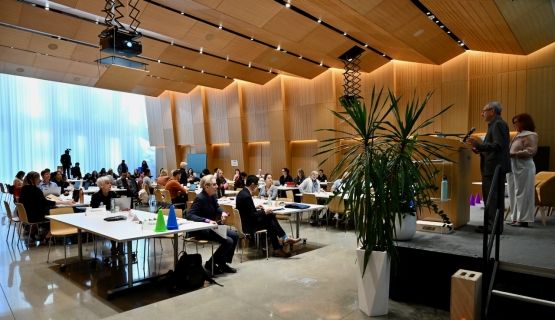
Inclusive employment strategies, resources showcased at symposium
Published: November 12, 2025

At Work article
Slight improvements seen in workplace psychosocial conditions over 10 years
How have psychosocial work conditions changed in Canada over a 10-year time frame? Data from Statscan surveys suggest a slight improvement, but the IWH researchers behind the analysis are cautious in their interpretations.
Published: November 2018

IWH in the media
Longer hours linked to diabetes risk in women: Study
Women who work more than 45 hours per week face a 63 per cent greater risk of developing diabetes than women who work fewer hours, but the incidence of diabetes tends to go down for men who work longer hours. Marcel Vander Wier reports on a study by the Institute for Work and Health (IWH) and Institute for Clinical Evaluative Sciences (ICES).
Published: Canadian HR Reporter, November 2018
Journal article
Journal article
Association between dimensions of the psychosocial and physical work environment and latent smoking trajectories: a 16-year cohort study of the Canadian workforce
Published: Occupational and Environmental Medicine, October 2018
Journal article
Journal article
What are physicians told about their role in return to work and workers' compensation systems? An analysis of Canadian resources
Published: Policy and Practice in Health and Safety, October 2018
IWH in the media
Work-related stressors impact women and men differently, research finds
Exposure to psychosocial hazards at work adds to the growing health burden stress places upon both women and men, according to recently published Canadian research. Researchers from Institute for Work and Health found women reported lower job control, higher job strain (low job control combined with high job demands) and higher co-worker support compared with men. Women and men were found to have similar levels of job insecurity and supervisor support.
Published: Workers Health & Safety Centre, August 2018

Research Highlights
How workplace support needs differ for younger and older adults with chronic disease
When it comes to workplace supports, people with chronic disease have similar needs, even at different ages and career stages. However, young people face unique challenges related to accessing workplace supports, including a lack of available workplace resources and difficulty overcoming preconceptions around youth and chronic conditions.
Published: August 2018

Research Highlights
Gender differences in the link between psychosocial work exposures and stress
Women’s and men's stress levels are affected differently by psychosocial work exposures such as supervisor or co-worker support, job control, job demand and job insecurity.
Published: August 2018
At Work article
Sex/gender analysis: Links between psychosocial work factors and stress not always as expected
IWH study examines differences between men and women when it comes to the links between stress and psychosocial work factors such as supervisor support, job control and job security.
Published: August 2018

At Work article
Sex/gender analysis: Men and women with arthritis have same needs at work, but not the same supports
Study of workers with arthritis finds the need for workplace supports goes unmet more often among women, and that's due to the type of jobs and workplaces women are in.
Published: August 2018

At Work article
Sex/gender analysis: Gender study finds overwork linked to higher risks of diabetes in women, not men
Working too long increases risks of diabetes—for women, not men—IWH and ICES study finds.
Published: August 2018